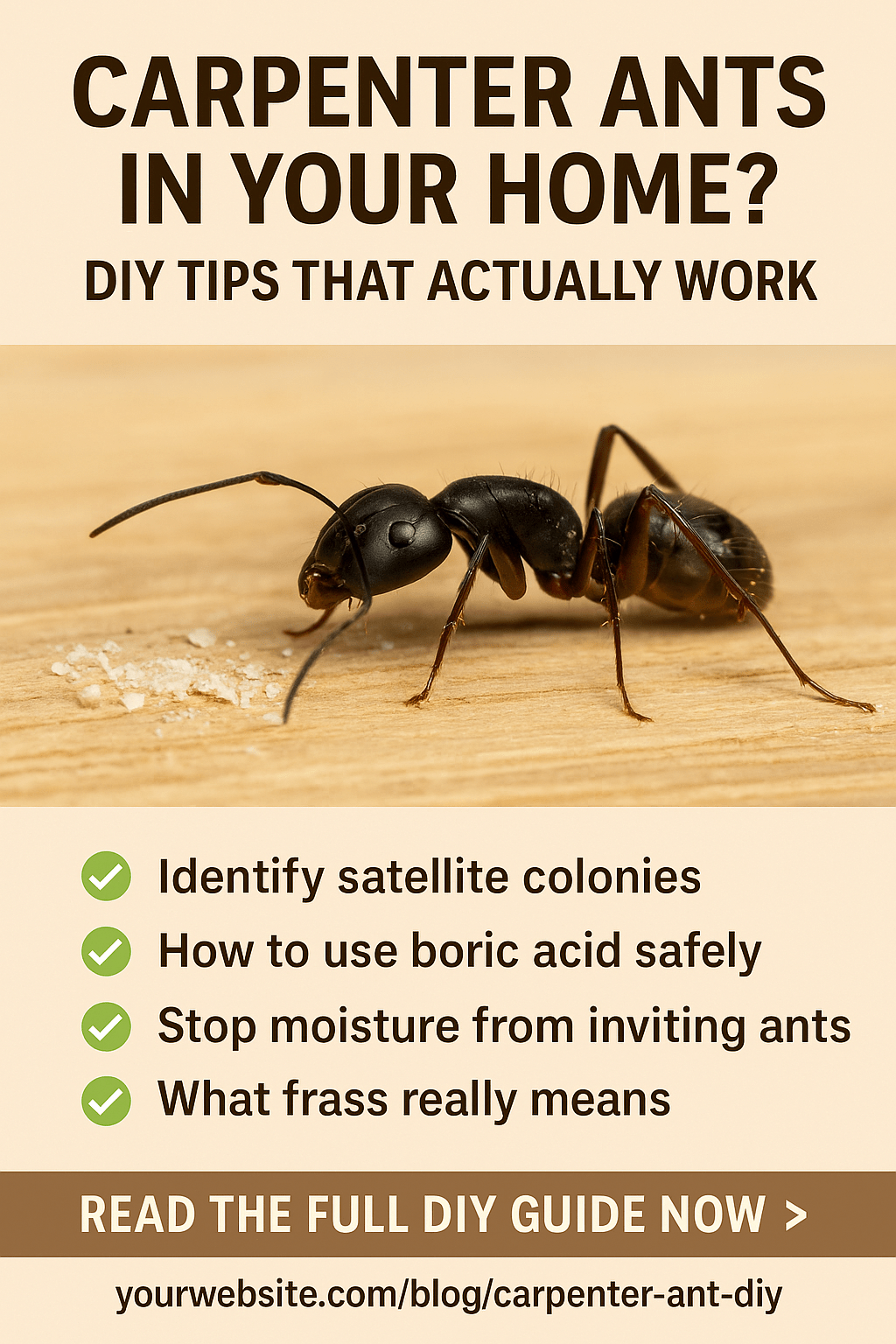
You’ve probably seen them before—those large, black ants trudging along your windowsill or exploring your porch. They’re not just passing through. If you live in the Midwest, chances are you’ve encountered carpenter ants, one of nature’s most determined little builders—who sometimes do a bit of unintentional damage.
But what exactly are they doing in your home, and what makes them different from other ants?
Let’s step into their world for a bit and get to know the carpenter ant—not as a pest, but as a surprisingly complex creature with a fascinating way of life.
🐜 Meet the Carpenter Ant: Big, Bold, and Busy
Carpenter ants (Camponotus genus) are among the largest ants in North America. Workers range from ¼ to ½ inch long—we used to joke in the pest control office that you could almost saddle one up and ride it!
In the Midwest, the most common species is Camponotus pennsylvanicus—jet-black, slightly shiny, and unmistakably bold. You’ll spot them in forests, firewood piles, or unfortunately, in the wooden framing of your home.
We often found them in the eaves or attics of houses, especially where water damage had weakened the wood.
Wood Tunneling, Not Wood Eating
Unlike termites, carpenter ants don’t eat wood—a common misconception. Instead, they chew through it to carve out smooth tunnels and nesting galleries where their colony can thrive. In nature, they target dead or decaying trees. Inside your home, moist or damaged wood—think leaky windows, roof issues, or damp basements—acts like a welcome sign.
🏰 Life Inside the Colony
Carpenter ants live in well-organized societies with a clear caste system. At the center is the queen, whose primary role is laying eggs. She can live up to 15 years—quite impressive for something you can barely see.
The first generation she produces becomes the workers, who forage, care for the young, and expand the nest.
Satellite Colonies: The Hidden Challenge
A mature colony may grow to 10,000–50,000 ants and often branches into satellite colonies—smaller nests separated from the main colony. These are commonly found inside homes where conditions are warmer and safer.
This is why carpenter ants can be so frustrating to deal with—removing one satellite nest won’t solve the problem if the main colony still thrives outside.
🌙 Daily Routine: Not So Random After All
To the casual observer, carpenter ants may seem like they’re wandering aimlessly. But their foraging is structured and efficient. Workers follow scent trails laid by scouts and usually emerge at dusk.
In the wild, they feast on honeydew (a sugary waste left by aphids), dead insects, and plant juices. Indoors, they’ll gladly go after sweets, grease, or even pet food.
These ants can memorize routes, find secure shelters, and even move their young if a threat appears. It’s more than instinct—it’s adaptive behavior at work.
🔬 Biology in Action: The Power of Mandibles
One of their defining features is a pair of strong mandibles—used for chewing wood, defending the colony, and carrying food. That crunching sound in your walls at night? Could be carpenter ants expanding their territory.
Their bodies are built for endurance:
- A narrow “waist” connects the thorax and abdomen.
- Six strong legs are perfect for climbing.
- Antennae constantly sweep for information.
Carpenter ants also have a “social stomach”, which stores liquid food to share with nestmates. That’s how food and information circulate through the colony.
🕊️ Reproduction: Winged Royalty
Each year, usually in late spring or early summer, you may see winged carpenter ants—larger, darker, and clumsier in flight. These are reproductive males and females leaving the nest to form new colonies.
After mating mid-air, the male dies. The female lands, sheds her wings, and begins her solitary task of founding a new nest. She hides in a sheltered space, lays her first eggs, and feeds her young using nutrients from her own body.
If she survives that critical stage, a brand-new carpenter ant colony begins.
🏠 Why They Come Indoors
Carpenter ants don’t chew into solid, dry wood without a reason. They’re drawn to moisture. Roof leaks, poor drainage, faulty window seals, or damp basement framing all create prime conditions.
Once inside, they can remain hidden for months before any visible activity appears.
💡 Pro Tip: DIY Carpenter Ant Control
If you’re dealing with carpenter ants, don’t just spray the ones you see. Find the source.
Look for signs like:
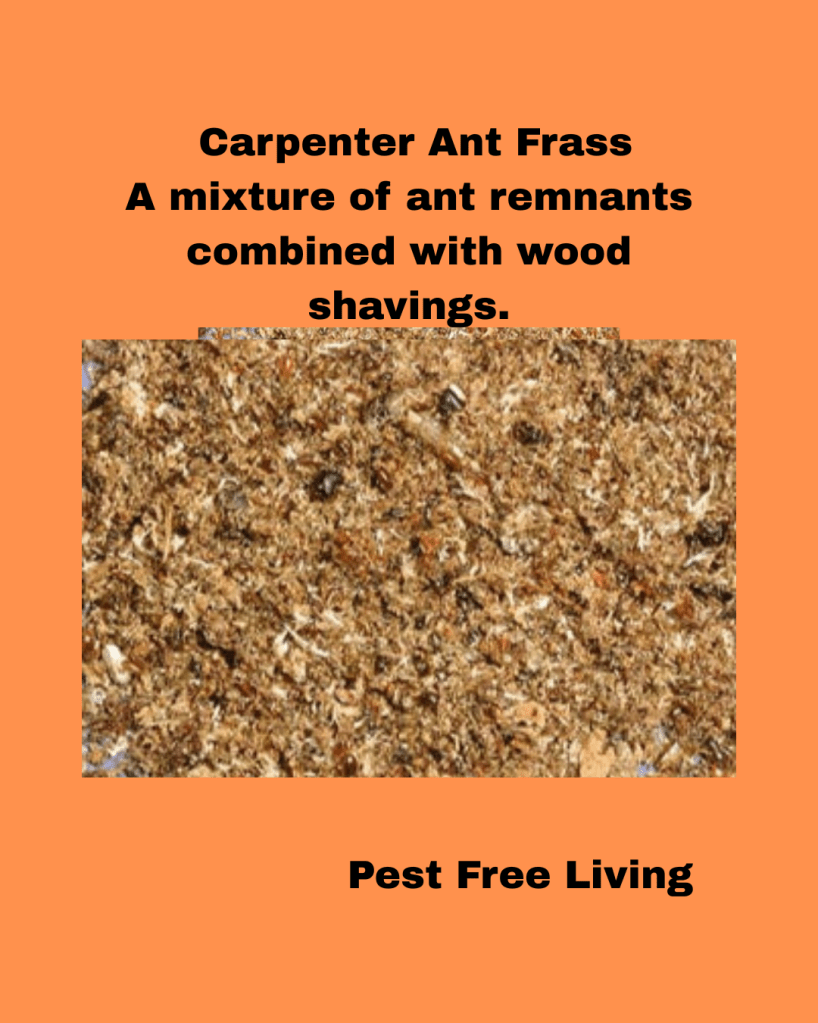
- Wood shavings, also known as frass
- Hollow-sounding beams
- Faint rustling noises in walls
How to Use Boric Acid:
You can treat wall voids or satellite nests with boric acid. If you’ve located a nest:
- Drill a small ¼-inch hole above the baseboard.
- Lightly dust boric acid into the void.
- Seal the hole with caulk.
🔹 Remember: More isn’t better. Just a fine, almost invisible dusting is enough to kill ants without triggering avoidance behavior.
🧠 Final Thoughts: More Than Just Pests
It’s easy to dismiss carpenter ants as destructive invaders. But when you really observe them, their world is fascinating—structured, intelligent, and surprisingly elegant.
They’ve survived millions of years by adapting and thriving in tough environments. Still, that doesn’t mean we want them chewing through our floor joists.
Prevention, moisture control, and a bit of well-placed boric acid can go a long way. After all, they’re not just bugs—they’re builders, survivors, and a small but remarkable part of the Midwest ecosystem.



 Pest Free Living
Leave a comment