Hidden Invader Series – by Thomas Johnson
When it comes to household pests, few creatures provoke more disgust or frustration than cockroaches. These ancient survivors have been on Earth for more than 300 million years, adapting to nearly every environment imaginable. Their ability to hide, breed quickly, and resist many control efforts has earned them a fitting title: the resilient invaders.
In this edition of the Hidden Invaders Series, we’ll uncover why cockroaches are such a formidable pest. We will look at the dangers they pose, and how my real-world experience with Orkin and Massey Services.
- The Hidden Life of Cockroaches
- Why Cockroaches Are a Major Concern
- Understanding Their Behavior
- Real-World Insights from the Field
- Preventing Cockroach Infestations
- Environmental Impact and Modern Pest Management
- When to Call a Professional
- The Bigger Picture
- Coming Next in the Series
The Hidden Life of Cockroaches
Cockroaches are nocturnal scavengers, meaning they’re most active at night. During the day, they retreat into cracks, crevices, and hidden voids—under appliances, behind cabinets, inside wall outlets, and beneath sinks. These tight spaces provide warmth, moisture, and darkness—exactly what roaches need to survive and reproduce.
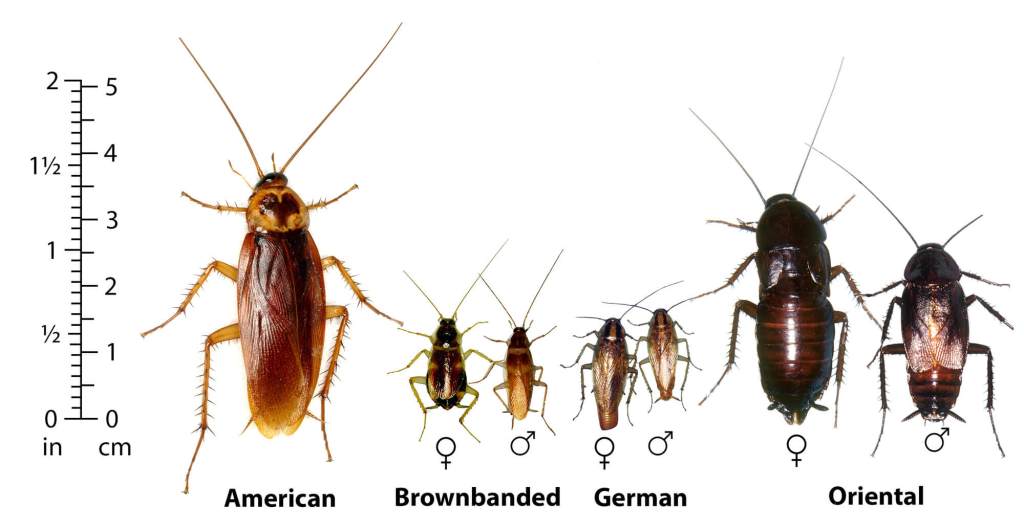
The most common species that invade homes include:
- German Cockroach – small, fast-breeding, and the most difficult to eradicate.
- American Cockroach – large, reddish-brown “palmetto bug,” often found in drains, basements, or in the South under mulch.
- Oriental Cockroach – prefers cool, damp environments like crawl spaces or leaky basements.
- Brown-Banded Cockroach – found in warmer, drier areas and can infest electronics or furniture, especially appliances.
Each species behaves a bit differently, but they all share a talent for going undetected until populations explode.
Why Cockroaches Are a Major Concern
1. Health Risks:
Cockroaches contaminate food, utensils, and surfaces as they forage. They spread pathogens such as E. coli, Salmonella, and Staphylococcus, potentially leading to food poisoning or gastrointestinal illness. Their shed skins and fecal particles are also potent allergens, known triggers for asthma—especially in children.
2. Structural and Sanitation Damage:
While roaches don’t chew through structures like termites, they damage fabrics, books, and paper products. They leave behind droppings and an unmistakable musty odor that can permeate entire rooms.
3. Rapid Reproduction:
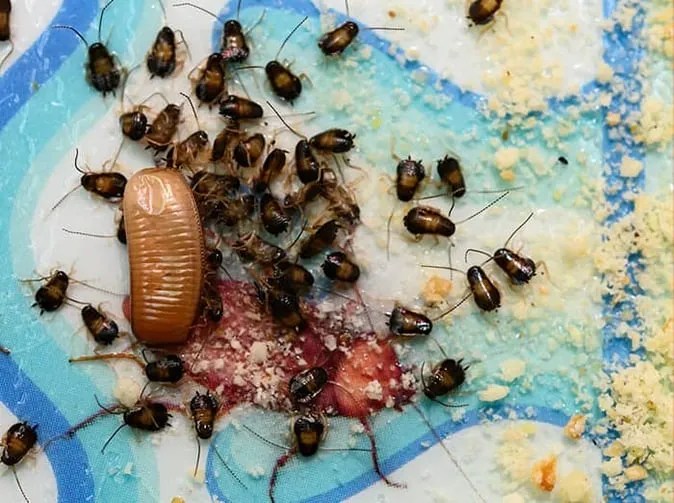
A single German cockroach female can produce hundreds of offspring in her lifetime. Under the right conditions, a small, unnoticed infestation can escalate into a full-blown problem within weeks. If they are not eradicated quickly, they can infest a whole house in no time.
4. Resistance and Adaptability:
Cockroaches are known to develop resistance to pesticides. Their hardy physiology, flexible diet, and ability to live for weeks without food make them notoriously difficult to eliminate. This is where good baits come in handy; many baits will have a secondary kill to them also.
Common Signs of an Infestation
Because cockroaches are secretive, spotting one during the day often signals a larger hidden infestation. Key warning signs include:
- Droppings: Small, black, pepper-like specks in corners, cabinets, and drawers.
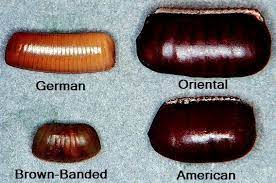
- Egg Capsules (Oothecae): Tan or brown cases often attached to furniture, cardboard, or baseboards.
- Odor: A strong, oily or musty smell in infested areas.
- Shed Skins: Evidence of molting as nymphs mature into adults.
- Sightings at Night: Roaches scattering when lights turn on, especially in kitchens or bathrooms.
Understanding Their Behavior
Cockroaches are opportunistic feeders and can consume nearly anything—crumbs, grease, glue, soap residue, even pet food. They follow chemical scent trails (pheromones) to locate food and shelter, which means one roach’s presence invites others.
They also require water, which is why infestations often start near leaks, dishwashers, or condensation under sinks or in the drain pan of a refrigerator. They are capable climbers, squeezing through openings as small as 1/16 inch, allowing them to move freely between units in apartment buildings or duplexes.
Why Professional Control Matters
Cockroach infestations are rarely solved with over-the-counter sprays. These pests quickly learn to avoid treated areas or develop resistance. Successful management demands a professional, multi-layered approach.
During my time with Orkin and later Massey Services, I saw firsthand how critical inspection and environmental control were to long-term success. Simply applying chemicals doesn’t work—understanding behavior, habitat, and conducive conditions is key. In every successful case, sanitation and cooperation between technician and homeowner made all the difference.
Proven Control Strategies
While the detailed control tips and checklists will appear in your dedicated guide, here’s the high-level process pest professionals follow when tackling cockroach infestations:
1. Inspection
A full inspection identifies harborages, species type, and infestation severity. Technicians use flashlights, glue traps, and monitors to locate active areas behind appliances, inside cabinets, and under sinks. Knowing whether you’re dealing with German or American cockroaches determines the control strategy.
2. Sanitation and Exclusion
Roaches thrive where food and moisture are abundant. Professionals work with homeowners to eliminate crumbs, standing water, grease buildup, and clutter. Cracks are sealed, gaps under doors closed, and wall penetrations caulked to block entry points.
3. Targeted Treatment
Instead of blanket spraying, trained technicians use baits, dusts, and residual insecticides strategically:
- Gel baits attract roaches to poisoned food sources.
- Insecticidal dusts such as boric acid or silica disrupt movement through wall voids.
- Residual sprays are applied along baseboards, plumbing penetrations, and other travel routes.
4. Monitoring and Follow-Up
Cockroach control requires persistence. Follow-up visits ensure egg capsules and nymphs that survived initial treatments are eliminated. Monitors help confirm population decline.
From experience in the field, I learned that education was just as vital as treatment. Teaching homeowners how to reduce moisture, improve sanitation, and recognize early warning signs created lasting prevention.
Real-World Insights from the Field
At Orkin, I remember a restaurant client who battled recurring German cockroach problems. No matter how many treatments they tried, the roaches kept returning. After a full inspection, we found the root cause: a leaking soda line running beneath the counter created a perfect water source. Once that leak was repaired and deep sanitation completed, the problem was resolved within weeks.
Later, at Massey Services, I worked with a homeowner who was convinced the roaches were coming from the neighbor’s house. After setting monitors, we discovered the infestation originated under her dishwasher where moisture and grease had collected. Education and cooperative action stopped the cycle for good.
These cases reinforced an essential truth: cockroach infestations are symptoms of environmental conditions. Fix the source, and control becomes sustainable.
Preventing Cockroach Infestations
Even if you’ve never seen one, preventive habits can protect your home from invasion:
- Seal entry points: Caulk around pipes, outlets, and wall cracks.
- Maintain cleanliness: Wipe counters, sweep floors, and avoid leaving dirty dishes overnight.
- Store food securely: Use sealed containers and avoid cardboard packaging that harbors eggs.
- Fix leaks promptly: Moisture attracts roaches faster than food.
- Vacuum regularly: Especially in kitchens and under furniture.
- Reduce clutter: Paper piles, cardboard boxes, and unused items provide shelter.
One common issue I’ve noticed in many homes is the collection of paper and plastic grocery bags. These piles create perfect hiding spots for cockroaches, providing shelter and warmth. Educating homeowners to avoid hoarding grocery bags—especially in the kitchen—is essential to successfully eliminating and preventing roach infestations.
Environmental Impact and Modern Pest Management
Today’s pest control industry focuses heavily on Integrated Pest Management (IPM)—a balanced approach combining chemical and non-chemical methods. Instead of relying solely on insecticides, IPM emphasizes inspection, sanitation, exclusion, and monitoring.
When I first started with Orkin, it was common practice to spray chemicals throughout a home to control roaches. In kitchens especially, we would often empty every cabinet and apply insecticides inside—all of which exposed families to unnecessary chemicals. Over the years, however, the adoption of Integrated Pest Management (IPM) has changed that approach completely.
During my years in the field, I witnessed how this shift not only improved results but also built trust with clients concerned about family safety and environmental impact. Many homeowners were surprised to learn that targeted baiting, sanitation, and structural fixes were often far more effective—and much safer—than heavy spraying ever was.
When to Call a Professional
If you see roaches during daylight hours or continue spotting them after DIY efforts, it’s time to contact a licensed pest management professional. Large infestations often extend deep into walls, ceilings, or crawl spaces—areas inaccessible without proper equipment. Professionals have the tools, knowledge, and experience to break breeding cycles safely and effectively.
The Bigger Picture
Cockroaches are among the world’s oldest survivors for a reason: adaptability. They exploit human environments, thrive on neglect, and resist elimination when underestimated. But with vigilance, education, and an integrated approach, even the most resilient invaders can be defeated.
The Hidden Invaders Series exists to reveal the unseen—those pests living quietly behind the walls, beneath the floors, or inside our cabinets. Each article is designed to empower homeowners with knowledge drawn from the front lines of pest control.
If you’ve ever faced a cockroach infestation, you know it’s not just about getting rid of a bug—it’s about reclaiming your comfort and peace of mind.
Coming Next in the Series
Up next, we’ll explore another persistent hidden threat: Termites – The Silent Destroyers. Stay tuned to learn how these wood-devouring insects compromise homes and how to stop them before they start.



 Pest Free Living
Leave a comment