
Hidden Invader Series – by Thomas Johnson
As temperatures drop and the days grow shorter, rodents begin their seasonal migration indoors—searching for food, warmth, and a place to live. Fall and winter are prime seasons for these nasty creatures. They may be small, but mice and rats can cause big problems and sleepless nights once they move in. From chewing on wires to contaminating food, their existence often goes unnoticed until the damage is done.
In this installment of the Hidden Invader Series, we’ll uncover what makes rodents such successful intruders, how to recognize their presence, the risks they can cause, and the strategies professionals use to keep them out for good.
- 🐭 Meet the Hidden Invaders
- 🏠 How Rodents Invade Homes
- ⚠️ The Damage They Cause
- 👀 Early Warning Signs of Rodent Activity
- 🧠 Understanding Rodent Behavior
- 🧰 Integrated Pest Management (IPM) in Action
- 🏚️ Common Harborage Areas
- 🧑🔧 From the Field – Real-World Experience
- 🧩 Why Rodent Control Fails
- 🧱 Seasonal Awareness – Fall Is the Trigger
- 🧰 Professional vs. DIY: Knowing When to Call for Help
- 🌿 The Importance of Prevention
- 🧭 Looking Ahead
🐭 Meet the Hidden Invaders
Rodents are among the most adaptable creatures on the planet. There are over 2,000 species worldwide, but in North America, homeowners mostly battle the house mouse, Norway rat, and the roof rat.
- House Mouse: Small, agile, and curious, this creature can squeeze through a hole as small as a dime. They often live behind walls, in attics, inside of kitchen appliances, or near kitchen pantries.
- Norway Rat: Also called the brown rat, this burrow-dwelling pest prefers basements, crawl spaces, and ground-level harborage areas.
- Roof Rat: Sleek and excellent climbers, roof rats prefer high places like attics, ceilings, eaves of homes, and trees near rooftops. If you live in the south they love to live in the top of palm trees.
Each species brings its own habits and risks, but they share one thing in common—once they find food and a place to live, they rarely leave on their own. This is where a professional comes into play, professionals can set traps, seal up openings, and eradicate these little varmints for you.
🏠 How Rodents Invade Homes
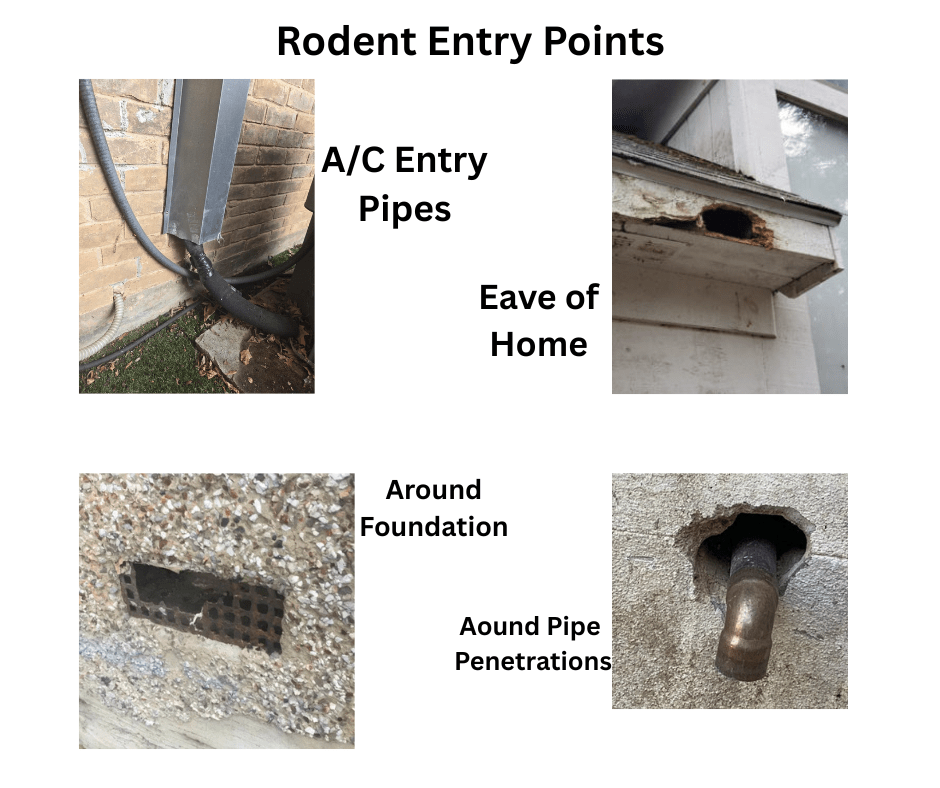
Rodents are experts at finding small openings, usually in the foundation, around the eaves of the house, or in openings around pipe penetrations. During the fall, when outdoor food becomes scarce, they follow scent trails and heat signatures leading to your house.
Typical entry points include:
- Gaps under doors and garage seals
- Utility line penetrations (AC pipes, plumbing, cable conduits)
- Foundation cracks and vent openings
- Roofline gaps, soffit vents, and attic eaves
- Dryer vents and weep holes in brick homes
Once inside, they establish nests using insulation, paper, and fabric. A single mouse can reproduce every 21 days, turning a small problem into a full infestation before winter is over.
⚠️ The Damage They Cause
Rodents are not just a nuisance—they’re destructive and dangerous. Here are the top reasons professionals take rodent control so seriously:
1. Property Damage
Rodents have ever-growing incisors that force them to gnaw constantly. They chew on electrical wiring (a major fire hazard), plumbing lines, wood framing, and insulation.
Rodents also get into automobile engines gnawing on battery cables, spark plug wires, hoses and belts. They chew on these items to make nesting material and can cause hundreds to thousands of dollars in damage.
2. Contamination & Food Loss
One mouse can leave thousands of droppings and urine trails each year. Mice urinate continuously as they move leaving pheromones along their way, this is a form of communication for them and to the rest of the social caste.
By leaving droppings and urinating this cause sever contamination of food supplies, pantries, and countertops, spreading bacteria like Salmonella and Leptospira.
3. Health Risks
Rodents are known carriers of over 30 diseases, including hantavirus, lymphocytic choriomeningitis (LCMV), and plague (via fleas). Even indirect contact—like breathing in dust from dried droppings—can cause illness.
4. Odor & Secondary Infestations
Decomposing rodents trapped in walls or attics produce foul odors and attract secondary pests such as flies, beetles, and mites.
5. Fire Hazards
According to the National Fire Protection Association, rodents are suspected to contribute to thousands of house fires annually due to chewed wiring. In my years of pest control, I have witnessed firsthand how extensive this damage can be—wires gnawed bare behind walls, insulation shredded near electrical panels, and nest materials packed tightly around outlets and appliances. In several homes, the smell of scorched wiring or flickering lights were early warning signs that something dangerous was hidden just out of sight. It’s a sobering reminder that what starts as a small rodent problem can quickly escalate into a life-threatening hazard if left unchecked.
👀 Early Warning Signs of Rodent Activity
Catching a rodent infestation early is key to preventing large-scale damage. Homeowners should routinely inspect for the following indicators:
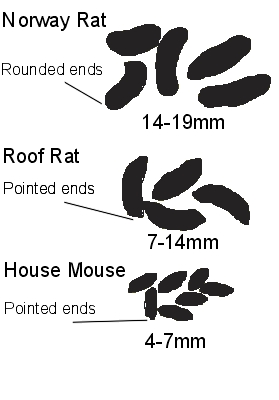
- Droppings: Small, dark pellets found near food sources, cabinets, or under sinks.
- Gnaw Marks: Rough edges on wood, plastic, and wiring.
- Tracks & Smudge Marks: Greasy rub marks along walls or baseboards from rodent oils.
- Nesting Materials: Shredded paper, fabric, or insulation in corners or behind appliances.
- Noises: Scratching, squeaking, or scampering sounds at night (especially in attics).
- Odor: A strong, musty ammonia-like smell from urine.
If you see one mouse, assume there are more. Rodents are social creatures, and visible activity usually means the infestation is already established.
🧠 Understanding Rodent Behavior
Years in the pest control field have taught me that knowing your enemy is half the battle. Rodents are intelligent, cautious, and incredibly adaptable.
Habits That Help Them Survive:
- Nocturnal: They forage mostly at night to avoid predators and human detection.
- Neophobic: Rodents fear new objects in their environment—why traps often fail when placed hastily.
- Keen Senses: They rely heavily on smell, touch, and taste, making bait placement critical.
- Exploratory Nature: Mice explore familiar routes daily, following walls and baseboards for safety.
This knowledge shapes every modern pest management strategy—because controlling rodents isn’t about killing what you see; it’s about eliminating the source and preventing re-entry.
🧰 Integrated Pest Management (IPM) in Action
When I started with Orkin years ago, the approach to rodent control was simple: put out poison bait and traps. It worked to a degree but often left gaps in long-term prevention. Over time, the industry shifted toward Integrated Pest Management (IPM)—a smarter, more sustainable system focused on inspection, exclusion, and prevention first.
During my later years with Massey, I saw how IPM revolutionized results. Instead of relying solely on chemicals, we emphasized structure, sanitation, and communication. Educating homeowners became just as important as treatment itself.
Today, successful rodent control programs typically include:
- Inspection: Locating entry points, droppings, and harborage zones.
- Exclusion: Sealing cracks, repairing screens, and installing door sweeps.
- Sanitation: Removing food and water sources.
- Trapping & Baiting: Targeted use of traps and bait stations in active areas.
- Monitoring: Regular follow-ups and documentation to ensure success.
The most effective pest control programs blend professional service with homeowner cooperation—creating an environment where rodents can’t thrive.
🏚️ Common Harborage Areas
Rodents are experts at finding the warmest, darkest corners of a home to set up their little house. Below are the most common hiding places professionals find on a inspection:
- Attics and insulation voids
- Behind kitchen appliances (stoves, dishwashers, refrigerators)
- Garage storage areas and boxes
- Basements and crawl spaces
- Inside wall cavities
- Under sinks and behind cabinets
- Outdoor sheds, grills, and pool equipment boxes
Each of these spots provides warmth, safety, and access to their favorite food—making them prime real estate for rodents during colder months.
🧑🔧 From the Field – Real-World Experience
I’ll never forget a service call early in my career with Orkin. A homeowner complained of “scratching sounds” in the ceiling. When I accessed the attic, I found dozens of droppings and nesting material woven through the insulation—signs of a thriving roof rat colony. The culprit was a gap no larger than a quarter around a pipe that was used as a vent pipe.
We sealed the entry, set traps, and cleaned the insulation of rodent droppings. Within two weeks, activity dropped to zero. That experience taught me something I’ve seen repeated countless times: the smallest opening can create the biggest problem.
Later, while managing rodent programs with Massey, we emphasized customer education. Instead of only treating the symptoms, we taught homeowners how to “rodent-proof” their property. Something as simple as trimming tree limbs away from the roof or sealing garage corners with steel wool can stop an invasion before it starts.
🧩 Why Rodent Control Fails
Even with professional help, infestations can return if key steps are skipped. Here are the top reasons rodent control fails:
- Incomplete Exclusion: Leaving even one unsealed gap can invite reinfestation.
- Poor Sanitation: Accessible pet food, crumbs, or open trash attract rodents back.
- Ignoring Attics or Crawl Spaces: Treating only visible areas misses hidden colonies.
- Trap Shyness: Placing traps incorrectly or changing them too often can make rodents cautious.
- Inconsistent Monitoring: Skipping follow-up inspections allows small populations to rebound.
A lasting solution requires persistence, partnership, and vigilance—three things that define true IPM work.
🧱 Seasonal Awareness – Fall Is the Trigger
Every autumn, pest professionals see a predictable spike in rodent activity. As outdoor temperatures drop below 50°F, food sources like seeds and vegetation become scarce, driving rodents toward warmth and shelter.
Homeowners should act before this migration begins by sealing cracks, inspecting attics, and maintaining clean storage areas. A proactive fall inspection can prevent a full-blown winter infestation.
🧰 Professional vs. DIY: Knowing When to Call for Help
DIY traps and baits can be helpful for small problems, but once rodents establish a nest, professional intervention is usually necessary. Licensed pest technicians bring specialized knowledge, such as:
- Identifying the species involved (important for targeting control).
- Using tamper-resistant bait stations for safety.
- Conducting structural assessments for exclusion work.
- Implementing multi-visit programs to ensure elimination.
Homeowners working with professionals gain peace of mind knowing the root causes—entry points, moisture, and sanitation issues—are being addressed, not just the symptoms.
🌿 The Importance of Prevention
Preventing rodents is far easier—and cheaper—than removing them later. Here are the key preventive measures every homeowner should follow:
- Seal cracks and holes larger than ¼ inch.
- Install door sweeps and weather stripping.
- Keep food sealed in airtight containers.
- Store pet food indoors and clean bowls daily.
- Eliminate standing water and leaky plumbing.
- Maintain yard cleanliness: trim shrubs and trees away from the house.
- Inspect attics, garages, and sheds regularly.
By removing the resources rodents need—food, water, and shelter—you make your home a hostile environment for infestation.
🧭 Looking Ahead
Rodents have lived alongside humans for thousands of years, but modern pest management has finally given us the upper hand. Through education, proactive maintenance, and integrated techniques, it’s possible to keep your home rodent-free all year long.
As fall approaches, remember: Rodents are on the move. What you do today—inspecting, sealing, and cleaning—can prevent a costly, stressful infestation tomorrow.
In the next chapter of the Hidden Invader Series, we’ll turn our attention to another cold-weather pest that loves the warmth of your home: Ants – The Unseen Colonies.
Download Your Free Rodent Control Checklist
Want a printable version to keep on hand for inspections or client visits?
📄 Download the Rodent Control and Prevention Checklist (PDF)
This checklist includes both inspection and prevention steps — perfect for homeowners, property managers, or pest professionals looking to stay ahead of the fall rodent rush.


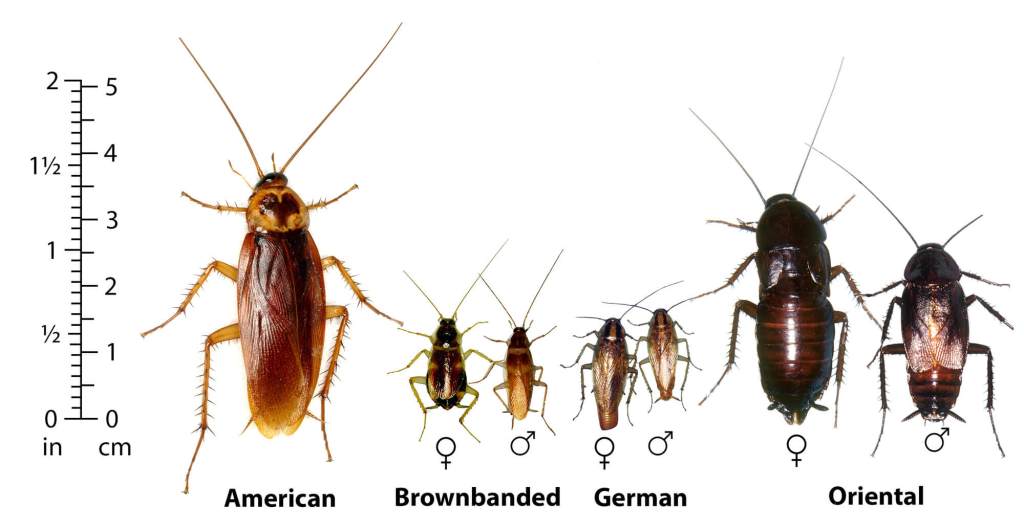
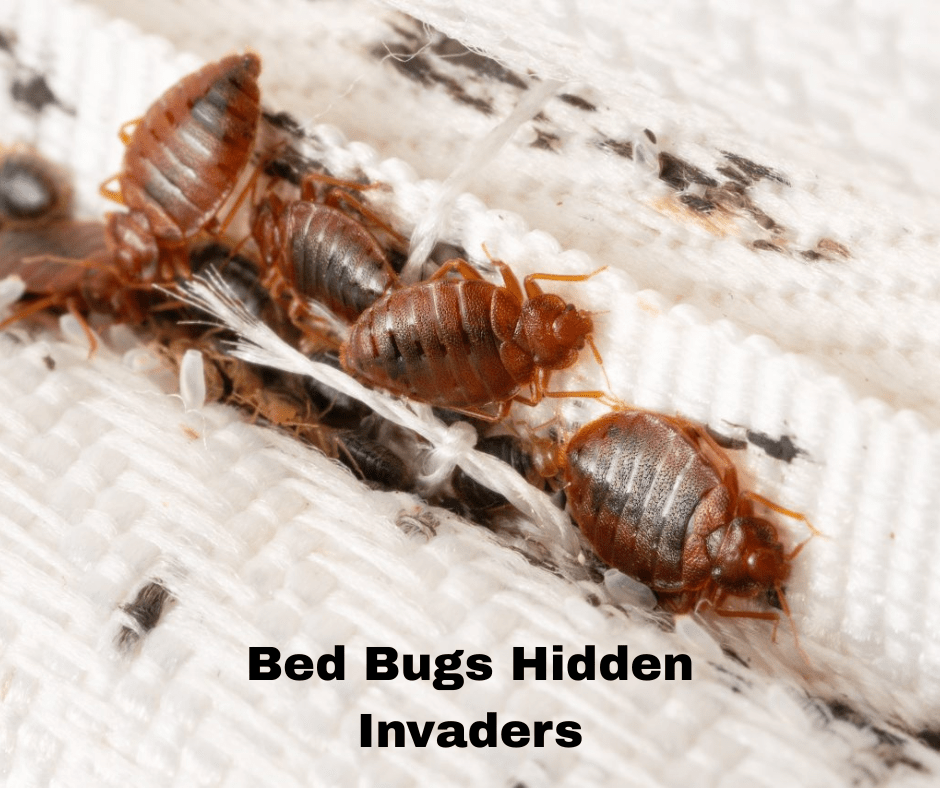
 Pest Free Living
Leave a comment